As a parent, you want your child to feel safe. You want your child to feel happy. You want your child to be ready to learn each day at Excellent Montessori School. A warm and supportive place helps your child grow in many ways. Studies show that children in Montessori settings build stronger emotional skills. These skills include empathy and flexibility. These skills are stronger than those in traditional classrooms.
Did you know? Montessori students scored higher in emotional intelligence. Their score was 57.69. Traditional students scored 42.08. This shows that a caring environment is important.
Think about your home routines. Try to add more Montessori-inspired ideas at home.
Key Takeaways
Make your home safe and respectful. Say hello to your child with kindness. Listen to how they feel. This helps your child trust you. It also helps them feel confident.
Set up routines that stay the same. Daily schedules that do not change help kids feel safe. They also help kids feel more independent. Use easy plans to help your child each day.
Let your child make choices to be independent. Give them two or three options. This helps them feel in control. It also helps them learn to make decisions.
Help your child be curious by letting them explore. Give them activities they can touch and do. Make a space for learning that lets them discover new things. This helps them be creative.
Show calmness and order in what you do. Your actions teach your child self-control. They also show how to handle problems in a good way.
Emotional Support and Trust

Safe and Respectful Atmosphere
You want your child to feel safe at school every day. When children feel respected, they are more open to learning. A safe and respectful place starts with simple things. You can greet your child with a smile. You can listen when they talk. You can be patient when they make mistakes. These small actions help build trust.
Montessori classrooms focus on kindness and respect. Teachers ask children to be polite to each other. Children learn grace and courtesy. This helps them make strong friendships. When your child feels important, they become more confident. They are willing to try new things. You can help at home by showing polite behavior. Celebrate your child’s efforts.
Tip: Mistakes are not failures. They help your child grow and learn. Remind your child that everyone makes mistakes. What matters is how we react.
A respectful place means understanding your child’s feelings. If your child feels upset, help them name their feelings. Offer comfort and help them with problems. At Excellent Montessori School, teachers see each child as special. They respond to feelings with care. They help children learn to control their emotions. This helps children feel less worried and more safe.
Here are some ways to make your home safe and respectful:
Teach your child to use polite words and actions.
Encourage your child to share their feelings.
Make spaces at home calm and welcoming.
Treat your child’s thoughts and feelings as important.
See hard behaviors as chances to teach, not punish.
Open Communication
Open communication helps build trust with your child. When you listen without judging, your child feels heard. Ask your child about their day. Show interest in what they do. If your child has a problem, help them talk about it. Work together to find answers.
Montessori teachers use respectful words every day. They speak kindly and let children share ideas. Children learn to solve problems by talking and listening. This helps them learn empathy and teamwork. You can use these ideas at home to get closer to your child.
Speak calmly and listen closely.
Let your child make choices that fit their age.
Give your child chances to learn from mistakes.
Respect your child’s privacy and feelings.
Note: Working together is important. When you and your child work as a team, you build trust. This helps your child feel sure of themselves.
At Excellent Montessori School, teachers connect with families. They respect different ways of talking and sharing. They care about each child’s background and culture. You can help by sharing your family’s stories and traditions. When your child sees their home life matters, they feel proud and safe.
Open communication also means helping your child solve problems calmly. Teach your child to use words, not anger. Show empathy by understanding when your child is upset. These skills will help your child do well in school and in life.
Consistent Routines
Predictable Daily Schedules
Children feel calm when they know what will happen next. Routines help kids feel safe and sure of themselves. At Excellent Montessori School, teachers use daily plans. These plans help children know what to expect. Kids can pay attention better and feel less worried.
Routines help your child feel safe and independent.
Kids learn to expect what comes next. This makes them more confident.
A planned day helps children control themselves and stay organized.
You can make routines at home too. Try a simple morning plan. Eat breakfast together, brush teeth, and read a book. When you keep routines the same, your child feels in control. This helps them deal with changes and problems with less worry.
Tip: Make a schedule with pictures or easy words. Your child can mark each step. This makes routines fun and simple!
Balancing Structure and Flexibility
Montessori routines mix rules with choices. Kids need clear rules. They also need to make choices. You can balance this by watching your child and changing routines as they grow.
Here are ways to balance rules and freedom at home:
Practice | Description |
|---|---|
Observation | Watch what your child likes and needs. |
Prepared Environment | Set up places with things your child can use alone. |
Consistent Routines | Keep routines steady, but change them if needed. |
Freedom of Choice | Let your child choose activities they like. |
Respectful Redirection | Kindly help your child focus if they get distracted. |
Gradual Adjustment | Give more freedom as your child shows they are responsible. |
Dynamic Equilibrium | Be patient as you find the right balance for your family. |
Cultivating Atmosphere | Change your home to keep it calm and good for learning. |
When you mix rules and choices, your child learns to trust themselves. They feel more independent and sure. This helps them try new things every day.
Encouraging Independence
Choice and Decision-Making
You help your child grow when you let them make choices. At Excellent Montessori School, teachers give children the chance to pick their own activities. This builds confidence and helps kids learn what they like. When you offer choices at home, you show your child that you trust them. You can ask, “Would you like to read a book or draw a picture?” Simple choices like these help your child feel in control.
Montessori classrooms use special principles to guide children:
Principle | Explanation |
|---|---|
Independence | Children learn to help themselves and make decisions. This builds confidence and problem-solving skills. |
Freedom Within Limits | Kids choose their activities, but teachers set clear rules. This balance helps children learn to make good choices. |
Respect for the Child | Every child gets treated with respect. This helps them express themselves and feel proud of their choices. |
Prepared Environment | Classrooms stay neat and easy to use. Children can find what they need and choose their own learning path. |
Tip: Give your child two or three options, not too many. This keeps choices simple and helps them decide with confidence.
Problem-Solving Skills
When you encourage independence, your child learns to solve problems on their own. This skill helps them feel happy and strong. Children who solve problems by themselves or with friends become more confident and learn to see challenges in new ways.
You can help your child build these skills by:
Naming the problem together. Ask your child what is wrong.
Using open-ended questions. Try, “What do you think we could do?”
Setting the right level of challenge. Pick tasks that are not too easy or too hard.
Letting your child try before you step in. Give them time to figure things out.
Praising their effort. Focus on how hard they tried, not just if they got it right.
Montessori teachers use tools like “1-2-3 Then Me.” Children try to solve a problem three ways before asking for help. Teachers also use pictures and routines to help kids remember what to do. These steps help your child become more independent and ready for new challenges.
Note: When you let your child solve problems, you help them become more resilient and creative. They learn that mistakes are just part of learning.
Nurturing Curiosity
Supporting Exploration
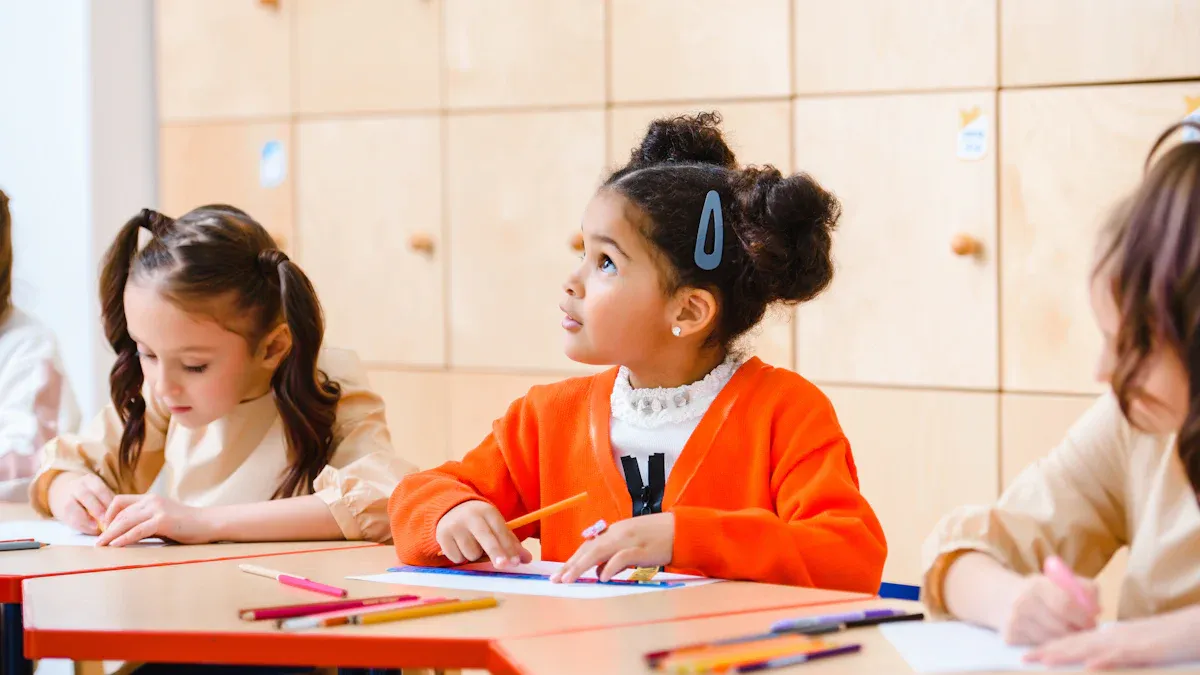
You can spark your child’s curiosity every day. Children love to ask questions and try new things. At Excellent Montessori School, teachers encourage kids to explore their interests. You can do the same at home. Montessori education puts children in charge of their learning. When you let your child choose what to explore, you help them build confidence.
Montessori classrooms use hands-on materials. These tools let children touch, see, and experiment. This makes learning fun and helps kids stay curious.
Guides in Montessori settings create safe spaces. Your child feels free to ask questions and take risks.
You can set up a learning area at home with child-sized furniture and easy-to-reach materials. This helps your child explore on their own.
Keep the space clutter-free. When things stay organized, your child learns responsibility and feels calm.
Offer a mix of educational materials. Pick things that match your child’s interests and age.
Create spots for physical play. Movement helps your child’s body and mind grow.
Give your child tools they can use by themselves. This supports independence.
Tip: Rotate toys and materials every few weeks. This keeps your child excited and curious about what’s new.
Montessori Activities at Home
You can bring Montessori ideas into your daily routine. Try simple activities that let your child explore and learn.
Sink or Float? Fill a bowl with water and gather objects. Ask your child to guess which will sink or float. This teaches science in a fun way.
Nature Walk and Observation Journal. Go outside and look for plants, bugs, or rocks. Let your child draw or write about what they see.
Color Mixing. Use water and paint to mix colors. Watch your child discover new shades and learn about chemistry.
Growing a Bean Sprout. Plant a bean seed and watch it grow. Your child learns about plant life cycles.
Magnet Discovery Bin. Collect objects and test which ones stick to a magnet. This activity introduces basic physics.
Note: Limit choices to two or three activities at a time. Too many options can confuse your child. Use labels or pictures to show where each item belongs.
You help your child stay curious when you support their questions and let them try new things. Curiosity leads to lifelong learning.
Calm and Beautiful Environments
Making a calm and pretty space helps your child relax. It helps them get ready to learn. Montessori philosophy says the space around your child matters. It can change their mood and focus. It can help them be more independent. When you enter a Montessori classroom, you see peace right away. You can make your home and yard feel this way too.
Organized and Inviting Spaces
You want your child to feel good in their space. An organized room helps your child find things fast. It helps them put things away easily. When everything has a spot, your child learns to be responsible. They feel proud of their space.
Here’s a table that shows how parts of a prepared environment help your child learn:
Aspect of Prepared Environment | Description | Impact on Learning Outcomes |
|---|---|---|
Child-sized furniture | Lets children move and work without help. | Builds independence and interest. |
Accessible materials | Materials at eye level invite kids to explore. | Helps kids pick and discover on their own. |
Aesthetic atmosphere | Light, plants, and art make things warm and nice. | Improves feelings and helps kids focus. |
Social-emotional atmosphere | Clear rules and mixed ages teach respect and leadership. | Builds social skills and self-control. |
You can use these ideas at home:
Make child-sized spots with hooks and baskets your child can reach.
Give everything a place. This makes cleaning up easy.
Add plants or a basket of nature things.
Keep routines the same so your child feels safe.
Let your child help with real jobs, like setting the table.
Help your child move from play to meals calmly.
Ask your child to do one thing at a time.
Show your child how to stay neat and calm.
Pick what you keep in the room carefully. Less is better.
Give your child quiet time to rest.
Tip: When you keep rooms neat and pretty, your child feels calm. They are ready to learn and be creative.
Peaceful Outdoor Play
Playing outside is as important as keeping rooms neat. Nature lets your child explore and move. It helps them connect with the world. Montessori philosophy wants kids to spend time outside. It helps them see beauty and order in nature.
“There must be provision for the child to have contact with nature; to understand and appreciate the order, the harmony, and the beauty in nature.”
When your child plays outside, they learn to control their feelings. They learn to be patient. Mindful listening and nature walks help your child slow down. They notice the world around them. Outdoor learning lowers stress and makes your child feel better. You give your child a calm place to grow strong and work with others.
You might see your child climb, jump, or share with friends. These things make their bodies strong. They learn to work together. Your child learns to care for nature and living things. Outdoor play helps your child get better at social skills. It helps them handle feelings.
You can help your child play outside peacefully by:
Making a safe spot for your child to explore.
Going on nature walks and collecting leaves or rocks.
Listening quietly to birds or the wind.
Doing simple outdoor projects, like planting seeds.
Letting your child play with others and solve problems.
Note: Outdoor time is not just for exercise. It helps your child find peace and connect with nature. It helps them grow in many ways.
When you make calm and pretty spaces inside and outside, your child feels safe. They can focus and feel inspired. You help them do well at Excellent Montessori School and everywhere else.
Adult Modeling and Guidance
Demonstrating Calm and Order
You help set how your child feels each day. When you act calm, your child learns to stay calm too. Showing order helps your child know what to do. In Montessori classrooms, adults make clear routines. This helps children feel sure and safe. Kids know what is expected of them. You can do this at home by keeping routines steady. Show patience when things get hard.
Children notice how you handle problems. If you stay calm, your child will try to do the same. You teach self-control by using gentle words and actions. Keeping your home tidy and peaceful helps your child feel safe. Trained adults in Montessori schools help kids make good choices. They help children become more independent. If adults do not show these habits, kids might feel worried or unsure. Your actions matter every day.
Tip: Take a slow breath before you react to problems. Your child will see this and learn from you.
Setting Positive Examples
You teach your child by what you do. In Montessori, respect is very important. Children learn best when you use kind words. Show kindness in your actions. Set clear rules and let your child make safe choices. This helps your child learn self-control. It also helps them make good decisions.
Here is a table with ways to set good examples:
Principle | Practice |
|---|---|
Respect for the Child | Use kind words, protect independence, notice feelings, protect focus. |
The Prepared Environment | Keep things neat and easy to reach, make things pretty, use the right materials. |
Freedom Within Limits | Set clear rules, let kids choose, show self-control and kindness. |
Hands-On, Self-Paced Learning | Teach when your child is ready, let them fix mistakes, keep learning fun. |
Multi-Age Groupings | Let kids learn from each other and work together. |
Discipline Aligned with Montessori | Show good manners, help kids want to do well, talk about actions. |
Respect makes your child feel important.
Kids learn to control themselves when you let them be independent.
Praise helps your child want to do better.
Freedom with rules helps your child learn self-control.
Fixing mistakes is part of learning.
You help your child grow every day. When you show calm, order, and kindness, your child does better at Excellent Montessori School and everywhere else.
Partnering with Excellent Montessori School
Understanding Montessori Principles
Working with Excellent Montessori School helps your child do well. You may ask what makes Montessori special. The answer is in a few main ideas. Montessori teachers respect every child. They see when your child is ready to learn. They let your child learn by exploring the classroom. Teachers make spaces for hands-on learning. Your child learns to guide their own education.
Here are some main Montessori principles you can try at home:
Respect the Children: Listen to what your child thinks and feels.
Mind the Sensitive Periods: Notice when your child wants to learn new things.
Let the Children Absorb: Give your child time to learn by doing.
Provide a Prepared Learning Environment: Make spaces that help your child discover.
Promote Self-Education: Let your child try new things by themselves.
When you know these ideas, you can help your child at home. You make sure your child’s learning is steady and helps them grow.
Communication with Teachers
You are important in your child’s success. Talking with teachers helps you know how your child is doing. Teachers at Excellent Montessori School give you updates often. You get reports about your child’s progress. You can meet with teachers to talk about what happens in class. Teachers want to be open with you. They want you to know how your child is growing.
You can use these ways to talk with teachers:
Regular updates: Read reports and ask questions.
Scheduled check-ins: Meet teachers to talk about your child’s time at school.
Transparency: Share your ideas and listen to what teachers say.
Active listening: Listen carefully when teachers talk about your child.
Studies show that Montessori students do better in reading, math, and social skills than others. Here is a table to show this:
Age Group | Skills Measured | Montessori Group Outcomes | Non-Montessori Group Outcomes |
|---|---|---|---|
5 years | Executive function, reading, math, social skills | Big gains in all areas | Smaller gains |
12 years | Story writing, social skills | Big gains in both areas | Smaller gains |
When you work with teachers and use Montessori ideas at home, your child can do their best.
Supporting the Whole Child
Fostering Social and Emotional Growth
You want your child to feel safe and happy. You also want them to feel sure of themselves. At Excellent Montessori School, teachers care about every part of your child. They do not just focus on schoolwork. Social and emotional growth is just as important as reading or math. In Montessori classrooms, children learn to work together. They share and listen to each other’s ideas. This helps them feel like they belong.
Montessori education helps your child learn empathy and respect. Teachers ask children to talk about their feelings. They also teach them to listen to others. When your child uses words to solve problems, they handle tough times better. The classroom is a safe place for feelings. Your child can say how they feel without worry.
When children feel safe, they can pay attention and enjoy learning more.
You can help at home by asking about your child’s feelings. Listen to what they say. Teach your child to use words when they are upset. Try acting out simple problems together. These steps help your child trust you. They also help your child become a kind friend.
Ask your child to share and wait their turn.
Praise your child when they are kind.
Show how to talk with respect at home.
Encouraging Physical Development
Physical growth matters as much as social and emotional skills. Montessori classrooms let children move around and try new things. Your child learns by doing things like walking, jumping, and pouring. These activities help build strong muscles.
The classroom is set up for movement. Children pick activities that help them balance and get stronger. This hands-on way helps their bodies and minds grow.
Kids move in every lesson, not just at playtime.
Fine motor skills grow with writing or tying shoes.
Big muscles get stronger with outdoor play and games.
Tip: Give your child time to move and explore every day. Simple jobs like sweeping or gardening help make bodies strong too.
When you help your child grow in every way, they become confident and healthy. They are ready for anything that comes their way.
You are important in your child’s time at Excellent Montessori School. Giving emotional support helps your child feel safe. Encouraging independence lets your child try things alone. Calm and pretty spaces help your child relax and learn. When you work with teachers, your child feels more confident. These Montessori principles help make a caring place:
Key Principle | Description |
|---|---|
Child-Centered Learning | Focuses on each child’s needs and interests. |
Prepared Environment | Lets children explore and learn on their own. |
Hands-On Learning | Uses real materials for active discovery. |
Mixed-Age Classrooms | Builds social skills through peer learning. |
Uninterrupted Work Periods | Gives time for deep focus. |
Respect for the Child | Values every child’s unique abilities. |
You help your child learn to do things by themselves.
You help them stay curious and grow in all ways.
Keep helping and changing as your child gets older. Everything you do helps your child succeed.
FAQ
What makes Montessori classrooms different from regular classrooms?
You see more freedom and choice in Montessori classrooms. Teachers guide you, not just tell you what to do. You use hands-on materials and work at your own pace. The space feels calm and organized.
How can I support my child’s independence at home?
Let your child make simple choices. You can ask, “Do you want to wear the blue shirt or the red one?” Give them small jobs like pouring water or setting the table. Praise their effort.
Why is outdoor play important for my child?
Outdoor play helps your child relax and learn about nature. You notice your child’s mood improve after time outside. They build strong muscles and learn to work with others. Nature sparks curiosity.
How do I communicate with teachers at Excellent Montessori School?
You can send emails, attend meetings, or read progress reports. Teachers want to hear your questions. Share your thoughts and listen to their advice. Working together helps your child succeed.

No responses yet